.png)
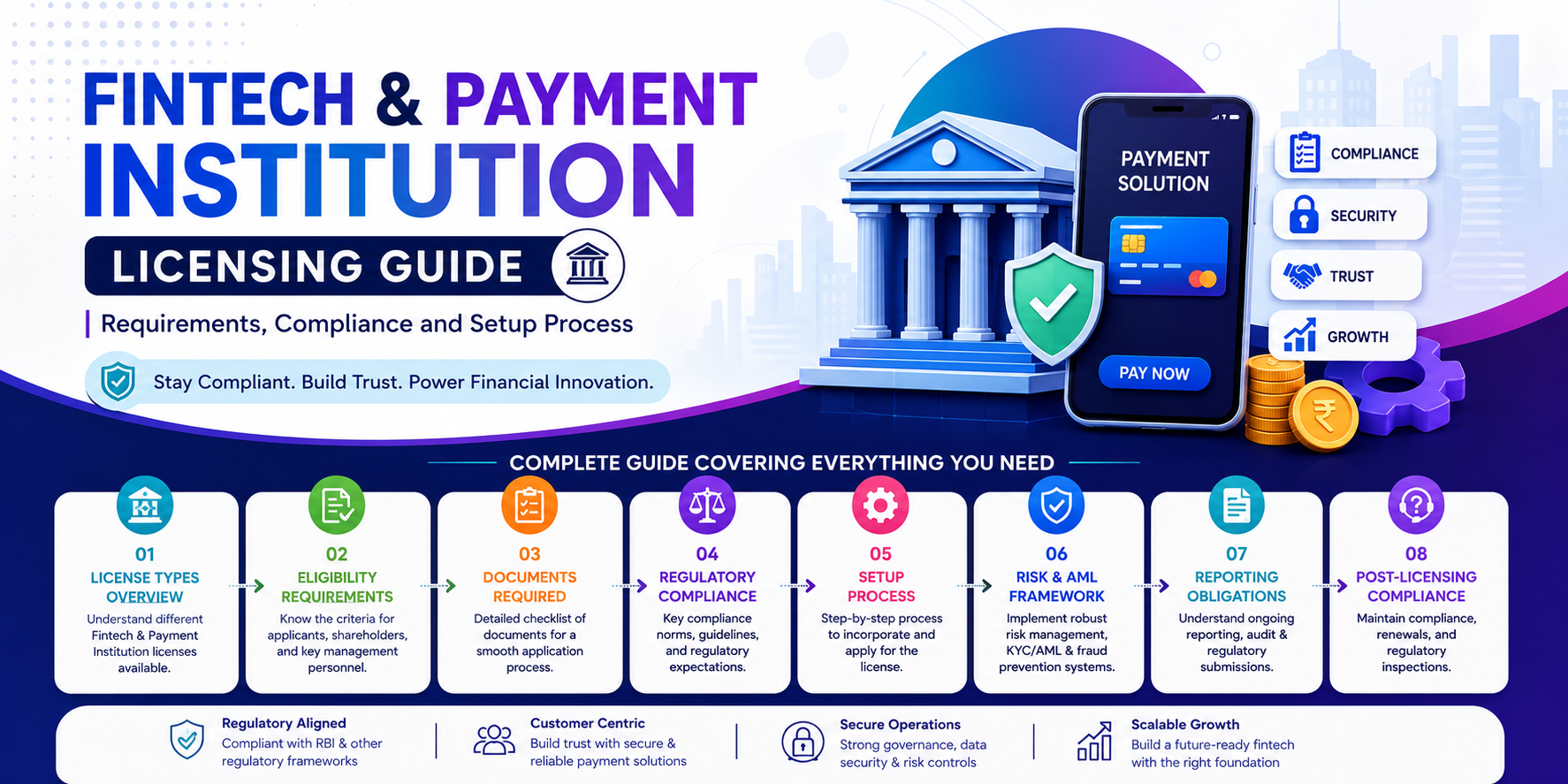
The global fintech industry has transformed how consumers and businesses make payments, transfer funds, access financial services, and manage digital assets. Whether you’re building a payment gateway, digital wallet, remittance platform, Buy Now Pay Later (BNPL) solution, embedded finance product, or cross-border payment business, one of the most important considerations is obtaining the appropriate Payment Institution License. 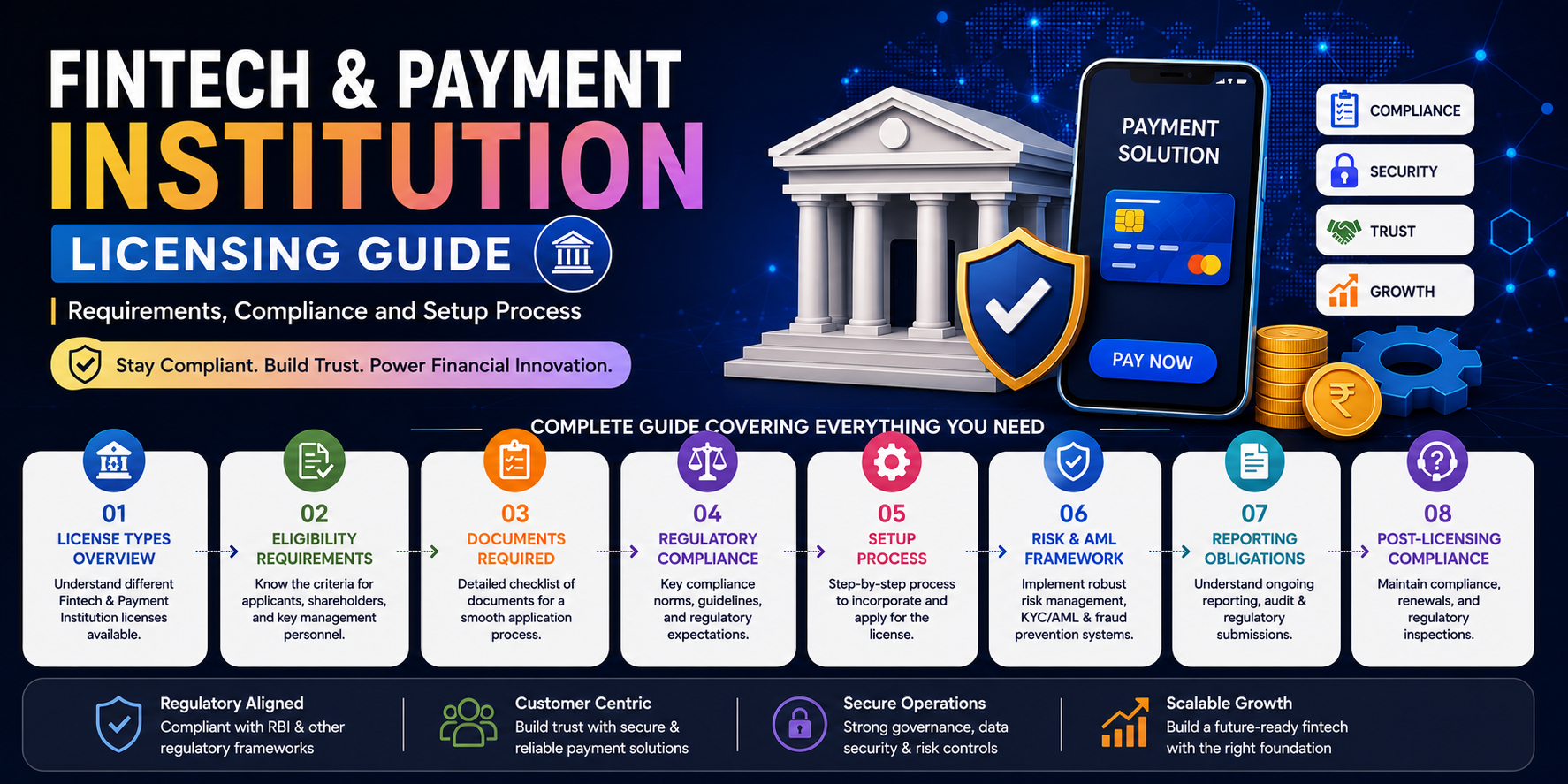
any fintech founders focus on product development and fundraising but underestimate the legal and regulatory requirements that govern payment services. Securing the right license from the outset not only ensures compliance but also builds credibility with customers, investors, banks, and payment partners.
In this guide, we’ll explain what a Payment Institution License is, who needs one, the general licensing requirements, the compliance obligations involved, and the typical setup process.
What is a Payment Institution License?
A Payment Institution License is a regulatory authorization that allows a business to provide payment-related services within a specific jurisdiction. Depending on the country, this license may be issued by a central bank, financial regulator, or payment authority.
Payment institutions generally facilitate the movement of money without operating as traditional banks. Depending on the jurisdiction and license category, authorized activities may include:
- Payment processing
- Digital wallets
- Domestic and international money transfers
- Merchant acquiring
- Payment gateways
- Card issuance
- Electronic money (e-money) services
- Foreign exchange payment services
- Cross-border remittance
Licensing requirements differ from country to country, making it essential to understand the regulatory framework applicable to your target market.
Why is Payment Institution Licensing Important?
Obtaining the appropriate fintech license offers several commercial and regulatory advantages.
Some of the key benefits include:
- Demonstrates regulatory compliance.
- Builds trust with customers and merchants.
- Improves relationships with banking partners.
- Supports investor confidence during fundraising.
- Enables lawful operation in regulated markets.
- Creates opportunities for cross-border expansion.
Many banks, payment processors, and financial institutions now require evidence of licensing or regulatory authorization before entering commercial partnerships.
Who Needs a Payment Institution License?
The exact requirements vary by jurisdiction, but businesses providing regulated payment services should assess whether licensing applies.
Common examples include:
- Payment gateways
- Digital wallet providers
- Cross-border payment platforms
- Merchant acquiring businesses
- Remittance companies
- Embedded finance providers
- Payroll payment solutions
- Bill payment platforms
- Card issuing businesses
- Foreign exchange payment providers
If your platform receives, stores, transfers, or processes customer funds, licensing requirements should be evaluated before launch.
General Licensing Requirements
Although every regulator has its own framework, most payment institution licensing applications require applicants to demonstrate financial stability, governance, and operational readiness.
Typical requirements include:
Corporate Structure
- Registered legal entity
- Business incorporation documents
- Shareholding structure
- Beneficial ownership details
- Registered office
Management & Governance
Regulators usually assess the suitability of directors and senior management.
Applicants may need to provide:
- Director identification documents
- Professional experience
- Compliance responsibilities
- Corporate governance framework
Business Plan
A detailed business plan generally covers:
- Business model
- Revenue streams
- Target customers
- Geographic markets
- Product offerings
- Growth strategy
- Risk assessment
Compliance Requirements
Licensing is only one part of the process. Payment institutions are expected to operate under a robust compliance framework.
Key compliance areas often include:
Anti-Money Laundering (AML)
Businesses should establish procedures for:
- Customer due diligence (CDD)
- Enhanced due diligence (EDD)
- Ongoing customer monitoring
- Politically Exposed Person (PEP) screening
- Sanctions screening
- Suspicious transaction reporting
Risk Management
Applicants should maintain:
- Operational risk policies
- Cybersecurity controls
- Fraud prevention measures
- Incident response procedures
- Business continuity planning
Data Protection
Handling customer financial information requires strong security practices, including:
- Data privacy policies
- Access controls
- Secure data storage
- Incident reporting procedures
Step-by-Step Setup Process
Launching a licensed fintech business generally follows a structured approach.
Step 1: Determine Licensing Requirements
Identify the jurisdictions where your business will operate and determine whether a payment institution license is required.
Step 2: Establish the Business Entity
Register the company and prepare the corporate structure, ownership information, and governance framework.
Step 3: Develop Compliance Policies
Prepare internal documentation, including:
- AML Policy
- KYC Procedures
- Risk Management Policy
- Compliance Manual
- Data Protection Policy
- Internal Controls Framework
Step 4: Build Operational Infrastructure
Implement systems capable of supporting:
- Customer onboarding
- Identity verification
- Transaction monitoring
- Record keeping
- Audit logging
Step 5: Submit the Licensing Application
Prepare the application package and supporting documentation required by the relevant regulator.
Step 6: Respond to Regulatory Queries
Regulators may request additional information or clarification during the review process.
Step 7: Maintain Ongoing Compliance
Once licensed, businesses should continue to meet reporting, governance, audit, and compliance obligations.
Common Mistakes Fintech Startups Make
Many startups delay regulatory planning until product development is complete.
Common mistakes include:
- Launching before assessing licensing requirements.
- Inadequate AML documentation.
- Weak governance structures.
- Underestimating compliance costs.
- Insufficient cybersecurity controls.
- Poor transaction monitoring processes.
- Lack of regulatory legal advice.
Addressing these issues early can significantly reduce delays and compliance risks.
Frequently Asked Questions (FAQs)
Is a Payment Institution License the same as a banking license?
No. Payment institutions are generally authorised to provide specific payment services but do not operate as full-service banks.
Can startups apply for a Payment Institution License?
Yes. Many fintech startups obtain payment licenses, provided they satisfy the regulator’s licensing and compliance requirements.
Do licensing requirements differ by country?
Yes. Every jurisdiction has its own licensing framework, capital requirements, and regulatory expectations.
Is AML compliance mandatory?
For most regulated payment businesses, AML and CFT compliance form a core part of the licensing and ongoing regulatory obligations.
How long does the licensing process take?
Timelines vary depending on the jurisdiction, the complexity of the business model, and the completeness of the application.
Final Thoughts
The fintech sector continues to evolve rapidly, but regulation remains a critical part of building a sustainable payment business. Whether you’re launching a payment gateway, digital wallet, remittance platform, or embedded finance solution, obtaining the appropriate Payment Institution License is often one of the first major milestones.
Rather than viewing compliance as an obstacle, successful fintech companies integrate licensing, governance, AML controls, and risk management into their business strategy from the beginning. This not only helps satisfy regulatory expectations but also strengthens credibility with customers, financial institutions, and investors.
Need Assistance with Fintech or Payment Institution Licensing?
Whether you’re establishing a fintech startup, launching a payment platform, expanding internationally, or exploring licensing options in multiple jurisdictions, having the right legal and regulatory strategy can save significant time and reduce compliance risks.
At Your Tech Legal, we advise fintech companies, payment institutions, crypto businesses, and financial technology startups on licensing, regulatory compliance, AML/CFT frameworks, corporate structuring, cross-border expansion, and ongoing legal support.
If you’re planning to launch or scale your fintech business, our team can help you navigate the licensing process and develop a compliance framework tailored to your business model.
Contact Your Tech Legal today to discuss your fintech licensing and compliance requirements.
