.png)
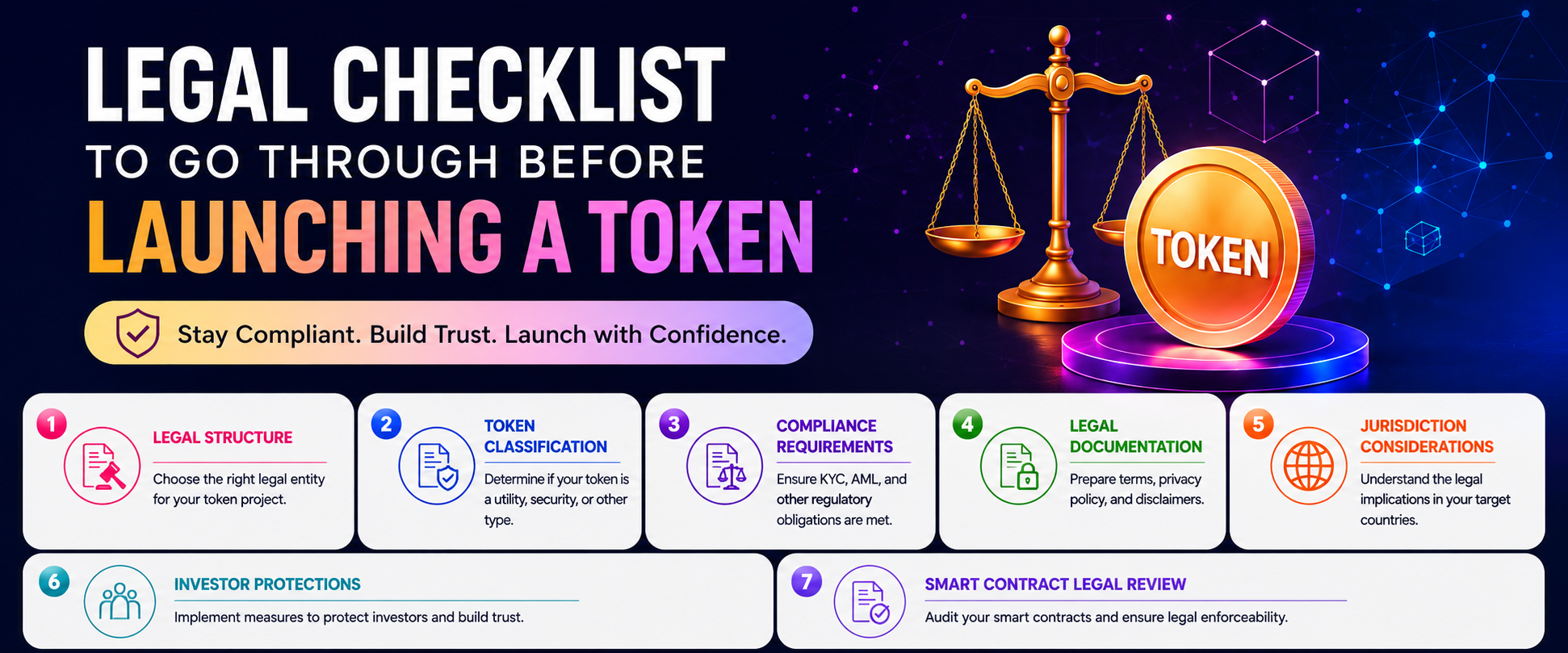
Launching a token is considered a milestone for blockchain startup creators. Bringing on new consumers, building communities, developing smart contracts, and tokenomics takes months of hard effort. But one area that often gets less attention than it should is legal compliance. 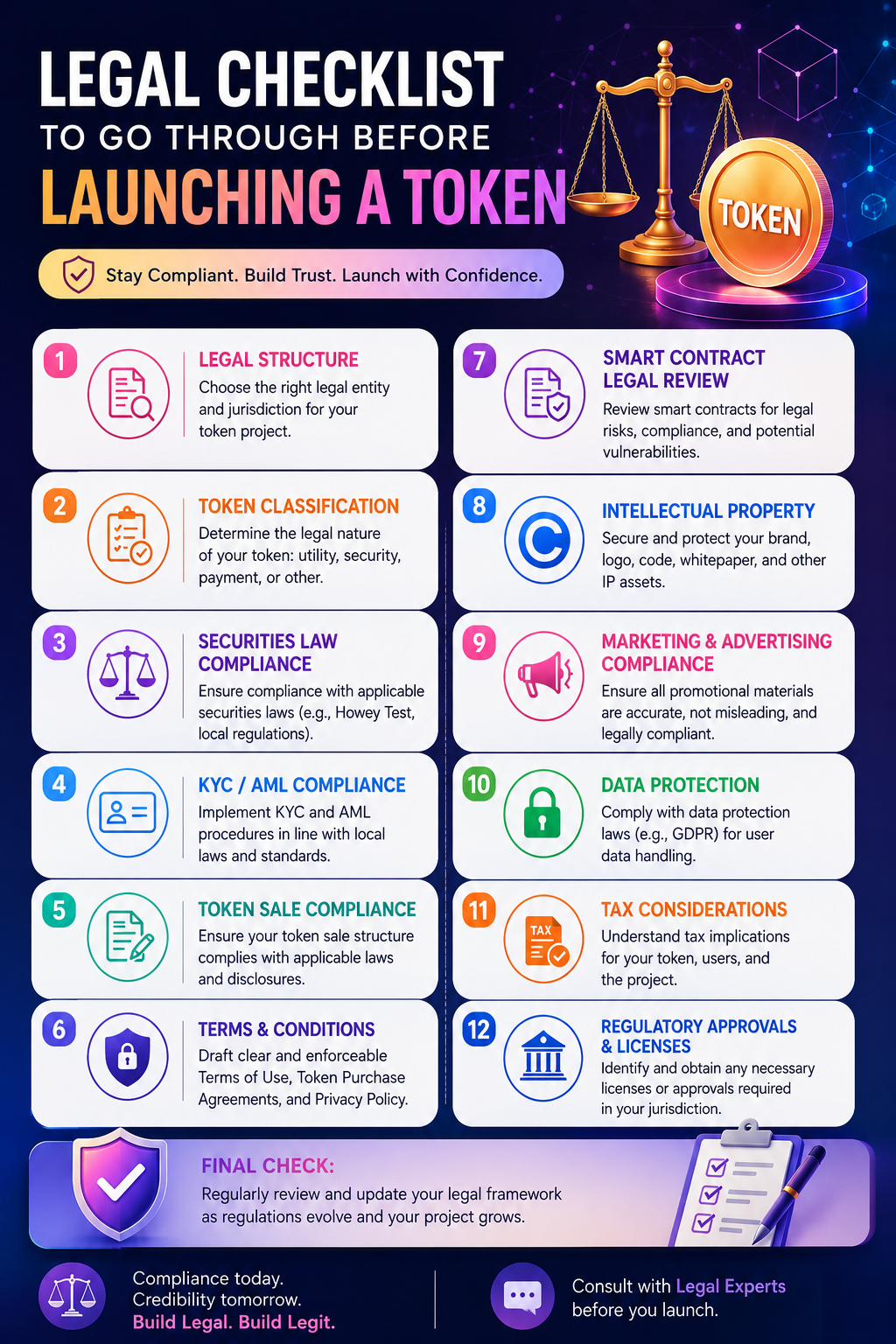
A botched token launch can lead to regulatory scrutiny, banking problems, challenges to list on exchanges and severe harm to reputation. The legal landscape for digital assets is evolving rapidly across jurisdictions and early legal preparedness is not only wise, it is imperative at Blockchain Lawyers in India.
Here are nine legal factors every project should consider before to launching a token.
- Know What Kind of Token You’re Building
In other words, the legal treatment of a token is a question of its genuine qualities and usefulness, above all. Is it for accessing a platform, for making payments, for governance rights or for investment opportunity? The regulators aren’t so much interested in labels as they are in the economic reality of the arrangement. The term “utility token” does not necessarily guarantee that such token will be treated as a utility token under applicable law.
- Securities Law
A key question is whether the token could be considered a security or another kind of regulated financial instrument. Different jurisdictions have different rules and standards and hence, a token structure that might be acceptable in one market may trigger regulatory restrictions in another market. One way for founders to identify hazards and tailor the service suitably is to have a jurisdiction-specific legal research before launch at Platform Governance Legal Advisory.
- Define target jurisdictions
Blockchain projects are usually global from day one, but that global reach also comes with legal risks in many countries. Founders have to select where the token will be marketed, sold and made available. They should also identify jurisdictions they want to exclude and take procedures like geo-blocking when needed. Compliance planning involves a defined market approach.
- Choose the Right Legal Structure
It matters who is behind the initiative. The framework should be housed in a corporate, foundation, subsidiary or hybrid structure, the choice of which will affect governance, taxation, liability and stakeholder confidence. The legal structure should be created based on the purpose of the token and the long-term aims of the enterprise, rather than for supposed regulatory benefits at DAO and Crypto Licensing Support.
- Legal Documents and Agreements
Good documentation is transparent and reduces uncertainty. Depending on the project, these may include Terms of Use, Privacy Policy, token purchase agreements, risk disclosures, website disclaimers and governance papers. These contracts establish expectations, set obligations, and offer legal safeguards for the project and its users.
- Assess AML and KYC regulations
AML and KYC regulations are still on the rise in the digital asset market. Projects need to consider whether there are any requirements applicable to their activities such as participant verification, sanctions screening, enhanced due diligence or ongoing monitoring. Non-compliance with these regulations can result in major regulatory and operational consequences for founders at tech legal services.
- Marketing & Communications
Most enforcement actions are based on how a project is marketed, not the technology itself. Claims of promised earnings, risk free participation or future price hikes or assured listings may attract unwelcome regulatory attention. It is essential to check whitepapers, websites, social media posts and public communications for accuracy, balance and appropriate language.
- Data protection responsibilities
Consider data collection and protection responsibilities. Many projects get personal data through newsletters, waitlists, customer support channels or account creation, even if they do not complete full KYC verification. Founders need to understand what data is being collected, how it will be used, how long it will be stored and if it will be shared internationally. Privacy compliance needs to be embedded into the operational architecture of the project from the outset at technology lawyer.
- Post-Launch Compliance
Planning Token compliance doesn’t end with the token generation event. Regulatory expectations alter, firm models evolve and new markets may be accessible over time. Projects should have processes for ongoing legal assessment, policy updates and governance and regulatory monitoring oversight. Sustainable efforts are not the same as the short-lived ones since they view compliance as an ongoing function, not a launch checklist.
Even with cutting edge technology and community interaction it takes more to have a successful token launch. Legal preparedness is just as important to protect the project, build trust and allow for long-term growth. Early mitigation of these issues allows founders to find hazards before they become expensive problems. There is no one-size-fits-all solution for all sorts of token models or jurisdictions, but taking the effort to get appropriate legal advise and embed compliance into the structure of the project can make a major difference in the odds of a successful launch. Speed is key in the digital asset sector, but careful launch produces long term value.
