.png)
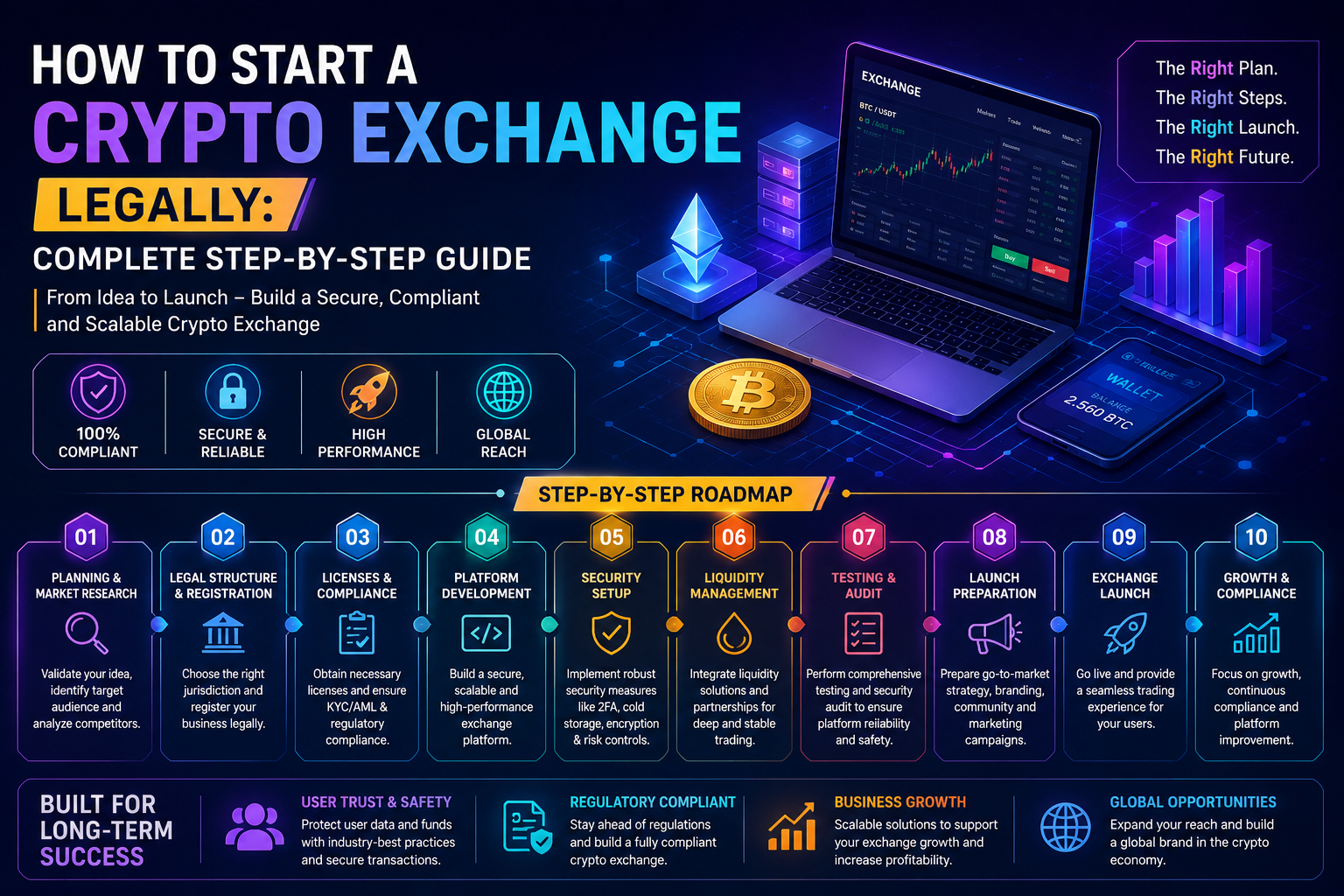
The cryptocurrency industry has evolved from a niche market into a global financial ecosystem handling billions of dollars in daily transactions. As digital assets continue to gain mainstream acceptance, entrepreneurs are increasingly exploring opportunities to launch their own cryptocurrency exchanges. However, while building the technology is important, the legal and regulatory side of operating a crypto exchange is what determines whether your business can survive and scale.
Many startups make the mistake of focusing entirely on development while overlooking licensing, AML compliance, data protection, and regulatory obligations. This often results in delays, banking issues, or even enforcement actions.
In this guide, we’ll walk through the complete legal process of starting a crypto exchange—from choosing the right jurisdiction to obtaining licenses and implementing compliance systems at Top 10 Technology Law Firms in India.
What is a Cryptocurrency Exchange?
A cryptocurrency exchange is an online platform that allows users to buy, sell, trade, or convert cryptocurrencies such as Bitcoin, Ethereum, and stablecoins. Depending on the business model, exchanges may also support fiat currency deposits, crypto wallets, staking services, derivatives trading, and token listings.
There are several types of exchanges:
- Centralized Exchanges (CEX)
- Decentralized Exchanges (DEX)
- Hybrid Exchanges
- OTC Trading Platforms
- Peer-to-Peer (P2P) Marketplaces
Each model carries different regulatory requirements depending on the jurisdiction in which it operates.
Why Legal Compliance Matters
Unlike traditional software businesses, crypto exchanges operate in a highly regulated environment. Governments and financial regulators are increasingly introducing licensing regimes designed to prevent money laundering, terrorist financing, fraud, and consumer harm.
Operating without proper legal compliance can lead to:
- Regulatory investigations
- Frozen bank accounts
- Payment processor termination
- Heavy financial penalties
- Criminal liability in some jurisdictions
- Loss of customer trust
Building compliance from day one is significantly easier than trying to fix regulatory issues later.
Step 1: Choose the Right Jurisdiction
Your first legal decision is selecting where your exchange will be incorporated and licensed.
Different countries have different approaches toward crypto regulation.
Factors to evaluate include:
- Licensing requirements
- Corporate tax structure
- Banking availability
- Regulatory reputation
- Compliance costs
- Time required for approval
- Target customer markets
Popular crypto-friendly jurisdictions include:
- Dubai (VARA)
- Singapore
- Lithuania
- Estonia
- Hong Kong
- Cayman Islands
- British Virgin Islands
- El Salvador
The ideal jurisdiction depends on your business model, funding, customer base, and long-term expansion plans.
Step 2: Incorporate Your Company
Once you’ve selected a jurisdiction, establish the legal entity that will operate the exchange.
This generally involves:
- Company registration
- Shareholder documentation
- Director appointments
- Registered office setup
- Corporate governance documents
Many regulators also require local directors or compliance officers before granting approval.
Step 3: Determine Which Licenses You Need
This is where many founders become confused.
Not every crypto business requires the same authorization.
Depending on your services, you may require licensing for:
- Crypto exchange operations
- Virtual Asset Service Provider (VASP)
- Payment institution
- Electronic money institution
- Money services business
- Custody services
- Wallet services
- Broker or dealer activities
Your exact licensing requirements depend on:
- Whether you hold customer funds
- Fiat currency support
- Custody arrangements
- Margin or derivatives trading
- International operations
Obtaining legal advice before applying can save months of unnecessary delays.
Step 4: Build an AML and KYC Compliance Framework
Every regulated exchange must implement strong Anti-Money Laundering (AML) and Know Your Customer (KYC) procedures.
A compliant framework usually includes:
- Customer identity verification
- Risk-based customer classification
- Enhanced Due Diligence (EDD)
- Politically Exposed Person (PEP) screening
- Sanctions screening
- Transaction monitoring
- Suspicious Activity Reporting
- Record retention policies
These procedures are often reviewed during the licensing process.
Step 5: Prepare Internal Compliance Policies
Regulators expect exchanges to maintain documented internal procedures rather than relying on informal processes at Your trusted legal partner in India.
Typical policies include:
- AML Policy
- KYC Policy
- Risk Assessment Framework
- Customer Acceptance Policy
- Data Protection Policy
- Complaint Handling Procedure
- Cybersecurity Policy
- Business Continuity Plan
- Travel Rule Compliance Policy
- Incident Response Plan
These documents demonstrate operational maturity and regulatory readiness.
Step 6: Develop a Secure Technical Infrastructure
Legal compliance extends beyond documentation.
Regulators increasingly evaluate the security of crypto platforms.
Essential technical safeguards include:
- Multi-factor authentication
- Cold wallet custody
- Multi-signature wallets
- Penetration testing
- Smart contract audits
- Secure API management
- Data encryption
- Backup and disaster recovery systems
- Access control procedures
- Continuous monitoring
Cybersecurity has become one of the most important licensing considerations worldwide.
Step 7: Establish Banking and Payment Relationships
Most exchanges require banking services for fiat deposits and withdrawals.
Banks will usually conduct extensive due diligence before onboarding a crypto business.
Be prepared to provide:
- Corporate documents
- Licensing status
- AML policies
- Source of funds
- Business model explanation
- Compliance officer details
- Ownership information
Having legal documentation prepared significantly improves the onboarding process.
Step 8: Implement Ongoing Regulatory Compliance
Receiving a license is only the beginning.
Licensed exchanges must maintain continuous compliance through:
- Periodic regulatory reporting
- Independent audits
- Compliance reviews
- Employee training
- AML monitoring
- Risk assessments
- Customer due diligence updates
- Internal compliance testing
Failure to maintain these obligations can result in suspension or revocation of licenses.
Common Mistakes New Crypto Exchanges Make
Many founders underestimate regulatory expectations.
Some of the most common mistakes include:
- Starting development before obtaining legal advice
- Registering in the wrong jurisdiction
- Ignoring AML requirements
- Using generic legal templates
- Poor cybersecurity planning
- No data privacy compliance
- Weak customer onboarding procedures
- Lack of licensing strategy
- Assuming offshore incorporation removes regulatory obligations
Avoiding these mistakes early can save significant time and cost.
Documents Commonly Required During Licensing
Although requirements differ by jurisdiction, regulators frequently request:
- Business plan
- Financial projections
- Compliance manuals
- Corporate documents
- Shareholder details
- Director information
- AML/KYC policies
- Risk assessment
- Technology architecture
- Security framework
- Source of capital documentation
- Internal governance policies
Preparing these documents professionally can accelerate approval timelines.
Why Professional Legal Guidance Matters
Launching a crypto exchange involves far more than registering a company or building software.
Legal professionals help businesses:
- Choose the appropriate jurisdiction
- Structure operations correctly
- Prepare licensing applications
- Draft compliance policies
- Implement AML frameworks
- Review token listing procedures
- Advise on cross-border regulations
- Reduce regulatory risk
Professional guidance often prevents costly restructuring after launch.
Final Thoughts
The crypto industry continues to grow rapidly, but regulators worldwide are raising compliance standards. Entrepreneurs who prioritize legal readiness from the beginning are far more likely to build sustainable, trusted, and scalable exchanges.
Whether you plan to launch a centralized exchange, OTC desk, digital asset marketplace, or crypto trading platform, investing in proper licensing, AML compliance, cybersecurity, and governance is no longer optional—it’s the foundation of a successful business at DAOs and Their Legal Standing in India.
If you’re planning to establish a crypto exchange, obtaining experienced legal and compliance guidance before development begins can save considerable time, cost, and regulatory risk.
Frequently Asked Questions (FAQs)
- Do I need a license to start a crypto exchange?
In most jurisdictions, yes. Licensing requirements depend on the services you provide, your target market, and the regulatory framework of the country where you operate.
- Which country is best for starting a crypto exchange?
There is no universal answer. Jurisdictions such as Dubai, Singapore, Lithuania, Hong Kong, and certain offshore financial centers remain popular due to their established regulatory frameworks.
- How long does crypto exchange licensing take?
Approval timelines vary significantly. Depending on the jurisdiction and completeness of your application, licensing can take anywhere from a few months to over a year.
- What is AML compliance for a crypto exchange?
AML compliance refers to the systems and procedures used to prevent money laundering and financial crime, including customer verification, transaction monitoring, sanctions screening, and suspicious activity reporting at MiCA Regulations for Crypto Startups in 2026.
- Can Ioperateglobally with one crypto license?
Not necessarily. Many countries require separate registrations or compliance measures before offering services to their residents. Cross-border legal analysis is essential before expanding internationally.
- What are the biggest legal risks for crypto exchanges?
The most common risks include operating without appropriate licensing, weak AML controls, inadequate cybersecurity, poor customer due diligence, and failure to comply with local financial regulations.
