.png)
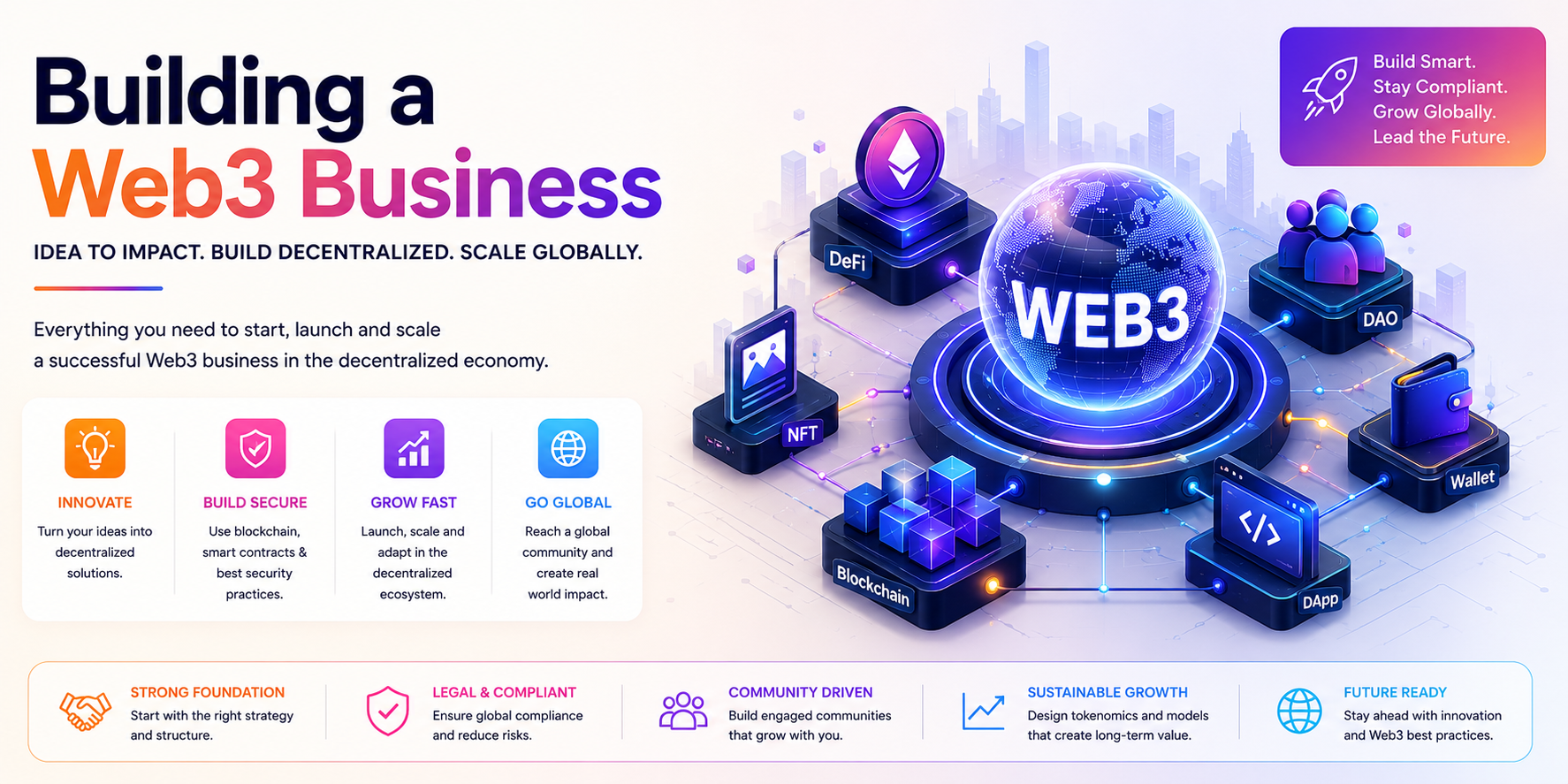
The Ultimate Guide to Starting a Web 3 Company
The growth of decentralized applications, digital assets and blockchain ecosystems is revolutionizing the digital economy. Today’s entrepreneurs are not only developing code, they are building companies using cryptocurrencies and smart contracts, tokenized assets and decentralized governance. “Building a Web3 firm is an interesting thought but it has to be thought about from a legal, regulatory and operational perspective. If you are considering a launch of a crypto exchange, blockchain infrastructure company, decentralised finance (DeFi) platform, NFT marketplace, Web3 gaming project or tokenisation business, you need to be aware of the legal and commercial landscape. In this post we will walk you through how to form a Web3 firm, and the most critical legal issues all entrepreneurs should be aware of.
Meanings & Definitions
- What is Web 3.0? What is web3?
Web3 is the next evolution of the internet, and it is based on blockchain technology. Web2 platforms are run by a single entity. Web3 apps let customers own their digital assets, connect to decentralized networks and participate in governance without a central middleman.
- Understanding Web3 Business A.
Web3 business is a company that produces products and services using blockchain technology. They provide decentralized applications (dApps), cryptocurrency offerings, tokenization solutions, blockchain infrastructure, NFT platforms, digital wallets, or decentralized financial services.
- What is Blockchain Technology?
A blockchain is a digital ledger that records transactions and is duplicated across several computers. Each transaction is secured by cryptography and linked to the previous transaction. It is an unchangeable, transparent and decentralized system at Top 10 Technology Law Firms in India.
- What is a Smart Contract?
Smart contracts are contracts that execute themselves on a blockchain. They are configured to perform particular tasks on their own when certain requirements are satisfied. No manual labor needed. Less intermediaries involved.
- What is a digital asset?
Digital assets are digital representations of value or ownership such as cryptocurrencies, utility tokens, security tokens, stablecoins, NFTs and other assets issued on a blockchain. The legal status of these entities varies from nation to country and generally defines their regulation criteria.
- What is a DAO (Decentralized Autonomous Organization)?
A DAO is a model of company governance that is run by voting on the blockchain. Members vote as a block, with governance rules baked into smart contracts.
- What is Tokenization?
Tokenization is the act of turning rights to an asset into a token on a blockchain. All of them can be digitalized to enable fractional ownership and better liquidity. Shares, commodities etc. Real estate, art, intellectual property etc.
Why Build a Web3 Business?
Companies in the Web3 economy have been able to transact across borders with less reliance on legacy intermediaries. Blockchain technology promises faster settlements, transparent record-keeping, programmable transactions, and new ways in which to support ventures. Governments and organizations are continuing to adopt digital assets and decentralized technologies. The need for compatible Web3 enterprises has soared across banking, gaming, healthcare, logistics, education and digital identity. Web3 enables entrepreneurs to access international markets from day one. Companies may build global communities, automate processes via smart contracts, and generate new revenue streams on tokenized ecosystems. But success is not only to find the technology, it is to construct a solid, legally recognized and enduring structure.
Step 1: Create your business idea
Behind every successful Web3 firm lies a solid business plan. The founders should question themselves: do they want to run a crypto exchange, do custody, build a decentralized finance system, issue digital tokens, build blockchain infrastructure or perform corporate blockchain services? The type of firm will affect licensing requirements, tax implications, compliance and revenue prospects. If you know your target market, your revenue model and your regulatory exposure in the planning stage, you will go a long way to minimizing your legal risks down the road.
Step 2. Select the Correct Jurisdiction
For every Web3 startup, one of the most important decisions will be to choose the right jurisdiction. Countries have adopted various approaches to regulation, taxation, licensing and business using blockchain and digital assets. Some countries have their own legislation on virtual assets to encourage innovation, while others have different compliance requirements. Entrepreneurs planning to establish a company need to consider incorporation expenses, taxation, regulatory clarity, investor preference, availability to finance and future expansion plans.
Step 3 Add Company Information
Once the founders have chosen a jurisdiction, they should proceed to form the firm. This comprises the incorporation of the company, appointment of directors, issuance of shares, tax registrations (if required) and establishment of the correct corporate governance structures. Many Web3 companies use holding corporations and operating subsidiaries to divide the ownership of intellectual property from operations. Proper incorporation gives you credibility with investors, banks and regulatory bodies and reduces your personal exposure at Tech Legal Group .
Step 4: Check licensing requirements
“You don’t want to regulate every crypto start-up.” However, existing laws may mandate registration or licensing by firms engaged in specific activities, including cryptocurrency exchanges, digital asset custody, broker-dealer operations, payment services, stablecoin issuance, or virtual asset transfers. The best method to avoid regulatory enforcement problems is to get a lawyer before you start doing business. A lawyer can help you to determine what licenses or registrations you may need.
- Build a Strong Compliance Architecture
Regulatory compliance is of increasing importance in the worldwide Web3 environment. Companies should have anti-money laundering (AML) policies, know your customer (KYC) protocols, sanctions screening, transaction monitoring systems, risk assessments and record-keeping standards.” Good compliance practices build partnerships with investors, financial institutions, payment providers and regulators and minimize operational risk.
- Legal Paperwork
There is legal paperwork that safeguard the users and the corp. Depending on the type of business, Founders should have Terms of Use, Privacy Policies, AML Policies, Risk Disclosures, Token Disclaimers, Employment Agreements, Software Development Agreements, Intellectual Property Assignment Agreements, Confidentiality Agreements and Investor Documentation. Will promote transparency with stakeholders and limit possibility for conflict.
Step 7: Securing Your Intellectual Property
In the vast majority of cases, a Web3 company’s most valuable asset is its technology. Register and record source code, smart contracts, trademarks, logos, documentation, proprietary algorithms, and other intellectual property required to be held by organizations.
Intellectual property protection enhances organizational value and lowers the danger of ownership issues.
Step 8: Build it, Launch it, Scale it
Legal readiness supports you with designing software, performing security audits, doing beta testing, and launching the product. Smart contract audits are a must for all blockchain applications that will deal with digital assets or user payments. “You’ve got to be off and running and companies need to be aware of regulatory changes, they need to be ahead of compliance, they need to tighten up cybersecurity protocols, they need to look at new jurisdictions where it makes sense,” he said. Finding the correct mix between regulatory compliance and technological innovation will be key to long-term success in the Web3 domain.
In short, Building the blockchain technology is only the first step in launching a Web3 company. Before entering the market, founders need to evaluate jurisdictional choices, regulatory requirements, licensing needs, corporate governance requirements, compliance procedures, intellectual property protection and contractual papers. A solid legal framework from the start helps organizations attract investors, gain the trust of customers and expand globally. As the blockchain economy evolves, the most creative entrepreneurs with excellent legal and compliance procedures will be best situated for long-term success.
Questions & Answers Q & A
- What’sa Web3 business?
A Web3 firm is a company that builds products or services that employ blockchain technology, decentralized protocols, smart contracts or digital assets.
- Do I need a license for my Web3 business?
Depends on the type of work you undertake. Services involving the exchange, custody or payment (or brokerage) of virtual assets may require regulatory permission.
- How to start a business in Web3? Best place for business ?
The right country will depend on the business concept, the clientelle, regulatory restrictions, tax concerns and fundraising technique.
- Am I able to create my own coin/token?
Yes, but the token structure needs to be reviewed for conformity with applicable securities, virtual asset and financial legislation.
- What legal documents does a Web3 startup need?
The primary documents are the Terms of Use, Privacy Policy, AML Policy, Risk Disclosure, recruiting agreements, software development agreements and intellectual property transfer agreements.
- What is KYC AML Compliance?
Conducting AML and KYC checks is vital to avoid financial crime, ensure compliance with regulations, and gain the confidence of banks, investors and clients.
- How does a Web3 Company safeguard its IP?
Companies should trademark everything they can, and use contractual agreements to protect ownership of software code, smart contracts, branding and other proprietary assets.
- What are the major hurdles for Web3 start-ups?
All of these are challenges: regulatory ambiguity, access to financial services, cyber security issues, token classification, cross border compliance, taxation and responding to fast changing legal frameworks.
